
Sewage Smell in the Yard or a Wet Spot Over the Septic? Early Warning Signs
August 27, 2026
Quick Answer: A sewage smell near your yard or a soft, soggy patch over the tank or drain field almost always means your septic system is struggling to keep waste contained and treated. The most common early signs are a rotten-egg odor outdoors, slow or gurgling drains inside the house, and grass that's greener or spongier than the rest of the lawn. These signs show up before a full backup, sometimes weeks before, which gives you a window to fix the actual cause — a clogged baffle, a saturated drain field, a tank overdue for pumping — before sewage forces its way into the house. In Walton County's clay-heavy soil, drain fields already drain slower than sandy soil elsewhere, so odor and pooling tend to appear sooner and linger longer once a system starts to fail. Catching it at the smell-and-wet-spot stage is almost always cheaper and less disruptive than catching it at the backed-up-toilet stage.
You're mowing the back yard on a Saturday and you catch it — that unmistakable rotten-egg smell drifting up from a patch of grass that's a little too green, a little too soft under your boots. Or maybe it's not the yard at all. Maybe you flushed the toilet an hour ago and the smell followed you into the hallway. Either way, something under your property is telling you it can't keep up anymore.
A septic system that's working right doesn't smell. It doesn't leave puddles. It doesn't announce itself at all — that's the whole point of it. So when you notice an odor or a soggy patch, you're not imagining a minor inconvenience. You're looking at the first stage of a system that's headed toward a much bigger problem if nobody steps in.
Why a Working Septic System Shouldn't Smell or Pool at All
Your septic tank holds wastewater long enough for solids to settle and bacteria to break them down. What's left — the clarified liquid in the middle layer — flows out to the drain field, where it trickles through gravel and soil and gets filtered before it ever reaches groundwater. Every part of that process is sealed and buried on purpose. Gas and odor stay contained inside the tank and vent safely through the plumbing stack on your roof, not through your lawn.
When you
smell sewage outside, or when water is surfacing where it shouldn't, one of those seals has failed. Maybe it's a cracked baffle letting solids escape toward the drain field. Maybe the tank is overdue for pumping and the sludge layer has grown so thick that untreated waste is pushing straight through to the soil. Maybe the drain field itself is saturated and simply can't absorb any more liquid, so it's coming back up instead. None of these start as emergencies. They start as small signals, and the signals are exactly what you're smelling and stepping in.
The Early Signs That Show Up Before a Full Backup
Sewage Odor Outdoors, Especially Near The Tank Or Drain Field
This is usually the first thing people notice, and it tends to come and go with the weather — stronger on humid mornings, after a rain, or when the barometric pressure drops. A trapped, sulfur-heavy smell that hangs around one specific part of the yard, rather than drifting from the whole property, is pointing you toward the tank or field location.
A Wet Spot, Spongy Ground, Or Standing Water Over The Tank Or Field
Walk the area after a dry stretch. If it's still soft, darker, or holding water when the rest of the lawn has dried out, that's not runoff — that's effluent surfacing because it has nowhere else to go.
Grass That's Greener, Thicker, Or Growing Faster In One Patch
Wastewater is loaded with nutrients. A stripe or oval of unusually lush grass sitting right over where the drain lines run is your yard advertising exactly where the system is leaking.
Slow Drains In More Than One Fixture At The Same Time
One sluggish sink is probably just that sink. But when the kitchen sink, the shower, and the toilet all start draining slower in the same week, water is backing up somewhere between the house and the tank, or the tank itself is full.
Gurgling Sounds From Drains Or Toilets
That gurgle is air escaping back up the pipe because something downstream is blocking or slowing the flow. It's easy to dismiss the first time you hear it. By the third or fourth time, it's telling you the same thing every time — go check the system.
A Septic Alarm Sounding, If Your System Has A Pump
Not every septic setup has an alarm, but if yours does and it goes off, treat it as urgent. It means water levels in the tank or pump chamber have climbed past where they should be.
Tip: After a good rain, take five minutes to walk the area over your tank and drain field in bare feet or old shoes. Soft, squishy ground or a smell that gets stronger as you get closer tells you more than looking from the porch ever will — and it costs you nothing but a little time.
What's Actually Happening Underground
A drain field doesn't fail overnight. Over years, a layer of organic buildup called biomat forms in the soil just below the gravel bed. A thin biomat layer is normal — it's actually part of how the soil filters the water. But when the tank sends more solids downstream than it should, whether from skipped pumping, a garbage disposal running heavy, or flushed wipes and grease, that biomat thickens until water can't pass through the soil fast enough. The field backs up like a clogged drain, except the drain is the size of your yard.
At the same time, the inlet baffle where wastewater first enters the tank can crack or break loose, especially in older concrete tanks. Once that baffle fails, solids that should settle and break down instead drift straight toward the outlet and into the field lines, speeding up the same clogging process. Tree roots do similar damage from the outside, working into pipe joints and drain lines over a few seasons until they choke off flow entirely.
Every one of these problems produces the same two symptoms on the surface: smell and standing water. That's why the early signs matter so much — they're the only clue you get before the underground damage turns into a wet basement floor or a toilet that won't flush at all.
Georgia Clay, Humidity, and Why the Signs Show Up the Way They Do Here
Walton County sits on red clay that drains slower than the sandy or loamy soil you'd find in other parts of the state. A drain field built on clay was designed with that limitation in mind, but it also means there's less margin for error. When a Loganville or Monroe system gets even a little overloaded, the clay can't wick the excess water away quickly the way sandier soil in south Georgia might. Water sits closer to the surface, which is exactly why wet spots and lush grass patches over a struggling field tend to show up faster and stick around longer here than they would elsewhere.
Humidity plays its own role. On a muggy North Georgia afternoon, odors that would dissipate quickly in dry air instead hang low over the yard, which is part of why so many homeowners in Athens, Watkinsville, and the rest of Walton and Clarke County notice a sewage smell on the still, heavy days rather than on breezy ones. Add the region's occasional winter freeze, and you get a second stress point — frozen or partially frozen ground can push more surface water toward whatever path is already weakest, which is usually the same spot where the drain field is already struggling.
Don't Ignore These Signs — Here's What Waiting Actually Costs You
Warning: Untreated wastewater carries bacteria, viruses, and parasites that pose a real health risk to you, your kids, and your pets. Keep people and animals away from any wet or smelly area until it's been checked, don't let anyone dig near the tank or drain field on their own, and never drive or park over the tank — the added weight can crack it or crush the lines underneath.
Waiting on a smell or a wet spot doesn't make it go away. It gives the underlying cause more time to spread. A drain field that's mildly saturated today can become fully clogged in a matter of weeks if the same volume of water keeps flowing into it, and once a field fails completely, replacing it costs far more — in time, money, and torn-up yard — than treating the early symptoms would have. Worse, a system that keeps backing up outdoors will eventually back up indoors instead, and there's a real difference between smelling sewage in the yard and finding it in your bathtub.
There's also the water supply to think about. If your property or a neighbor's relies on a well, a leaking septic system can push nitrates and bacteria into the groundwater long before you'd notice any change in your tap water. That's not a problem that announces itself with a smell you can walk away from — it's a slower, quieter risk that's much harder to undo.
Wet Spot Over the Tank vs. Wet Spot Over the Drain Field — Does It Matter?
It does, and it changes what the fix looks like. A wet spot directly over the tank usually points to a lid that's settled, a riser that's cracked, or a tank that's simply full and due for pumping — problems that are often quick to diagnose and resolve. A wet spot spread across the drain field, especially if it covers more than a few square feet or keeps expanding, points toward field saturation or a failing line, which takes more work to sort out and sometimes means rehabilitating or replacing part of the field itself.
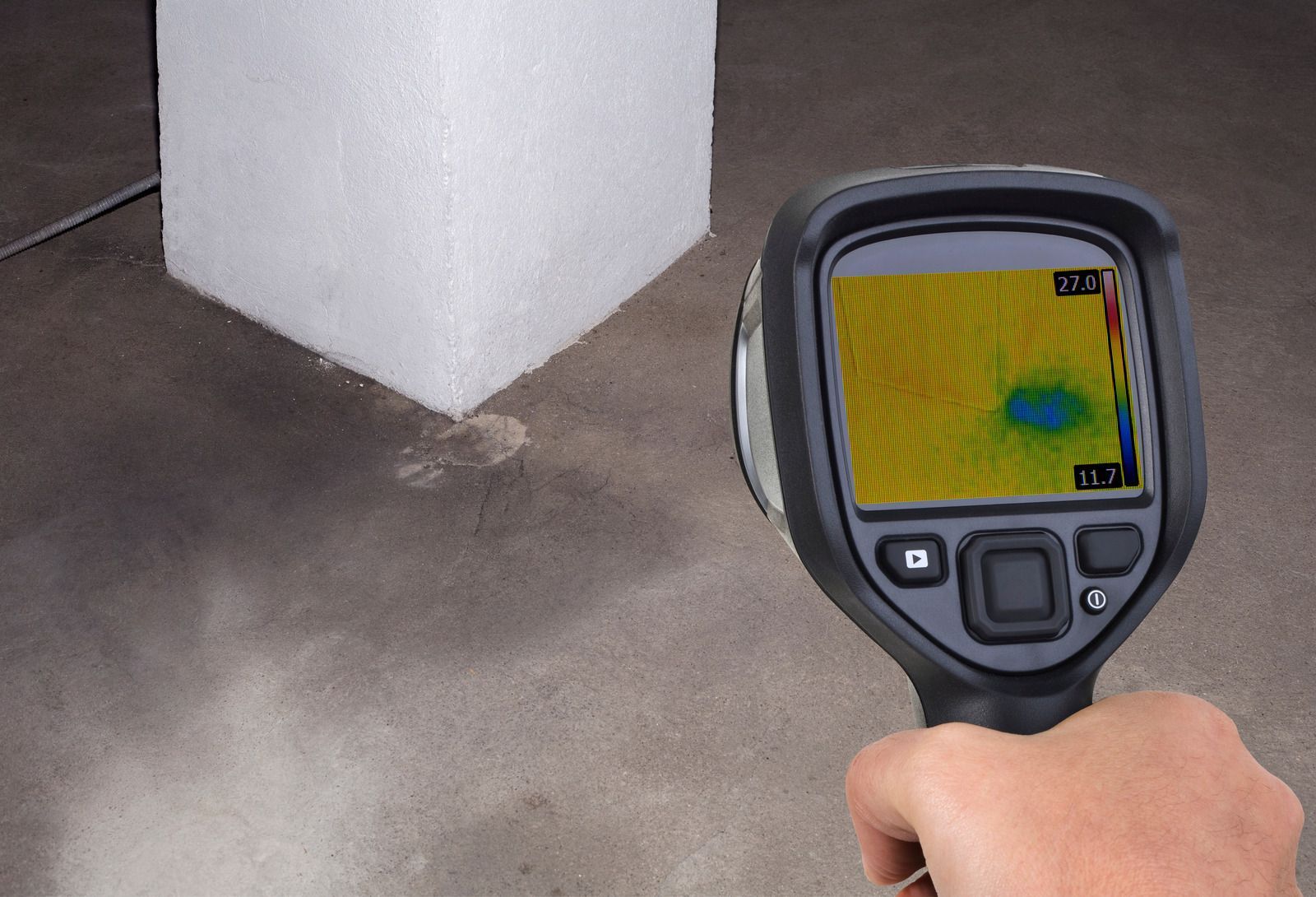
If you're not sure which one you're looking at and don't have a map of where your tank and lines sit, don't guess by poking around with a shovel. A camera inspection or a professional locate can tell you exactly what's underground and which component is under stress, without the risk of puncturing a pipe or cracking a lid you didn't know was there.
Frequently Asked Questions
Can a septic smell come and go depending on the weather?
Yes, and that's a useful clue, not a reason to dismiss it. Odor usually worsens on humid, still days or right after rain, when damp air traps smell near the ground and lingers.
Is a wet spot over the septic tank always a leak?
Not always, but it's never something to shrug off. Sometimes it's a settled lid or cracked riser letting rainwater pool, not wastewater surfacing. Other times it's what it looks like: a full tank.
How fast can a wet spot or odor turn into an actual sewage backup?
It varies with how saturated the drain field is and how much water keeps flowing in, but weeks rather than months is common once a field starts struggling; heavy daily use speeds failure.
Does heavy rain make septic problems worse in Walton County?
It can, especially with the clay soil common across Walton and Gwinnett counties. Clay drains slower than sandy soil, so heavy rain on an already-stressed drain field has nowhere to go but up.
Is it safe to walk over a wet, smelly patch of yard?
Avoid it if you can, and keep kids and pets away. Standing water near a septic system can carry bacteria from untreated wastewater. Mark the area, limit foot traffic, and get it inspected.
Can slow drains inside the house connect to a wet spot I'm seeing outside?
Very often, yes. Slow drains usually mean water isn't leaving the house fast enough, and a saturated or clogged drain field is a common reason. Noticing both together usually points to one problem.
When Early Septic Signs Deserve Your Attention
A sewage smell or a soft, soggy patch of lawn isn't just an inconvenience — it's your septic system telling you something underground needs attention. These signs almost always show up weeks before a real backup, which means there's still time to fix the actual cause instead of just the symptom. Whether it's a settled lid, a cracked baffle, or a drain field nearing capacity, catching the problem at this stage is usually simpler, faster, and far less disruptive than waiting for it to worsen.
That window matters even more in Walton County, where clay-heavy soil holds water longer and lets odor and pooling linger once a system starts to struggle. With 10
years of experience serving Monroe, GA, SHARP Improvements
has seen how quickly small signs can turn into bigger problems when left unchecked. Paying attention now, rather than after the smell fades or the ground dries out, is often what separates a quick repair from a much larger one down the road.
You might also like