
Your Lawn Irrigation System and Backflow Risk: The Hidden Danger in a Georgia Yard
June 28, 2026
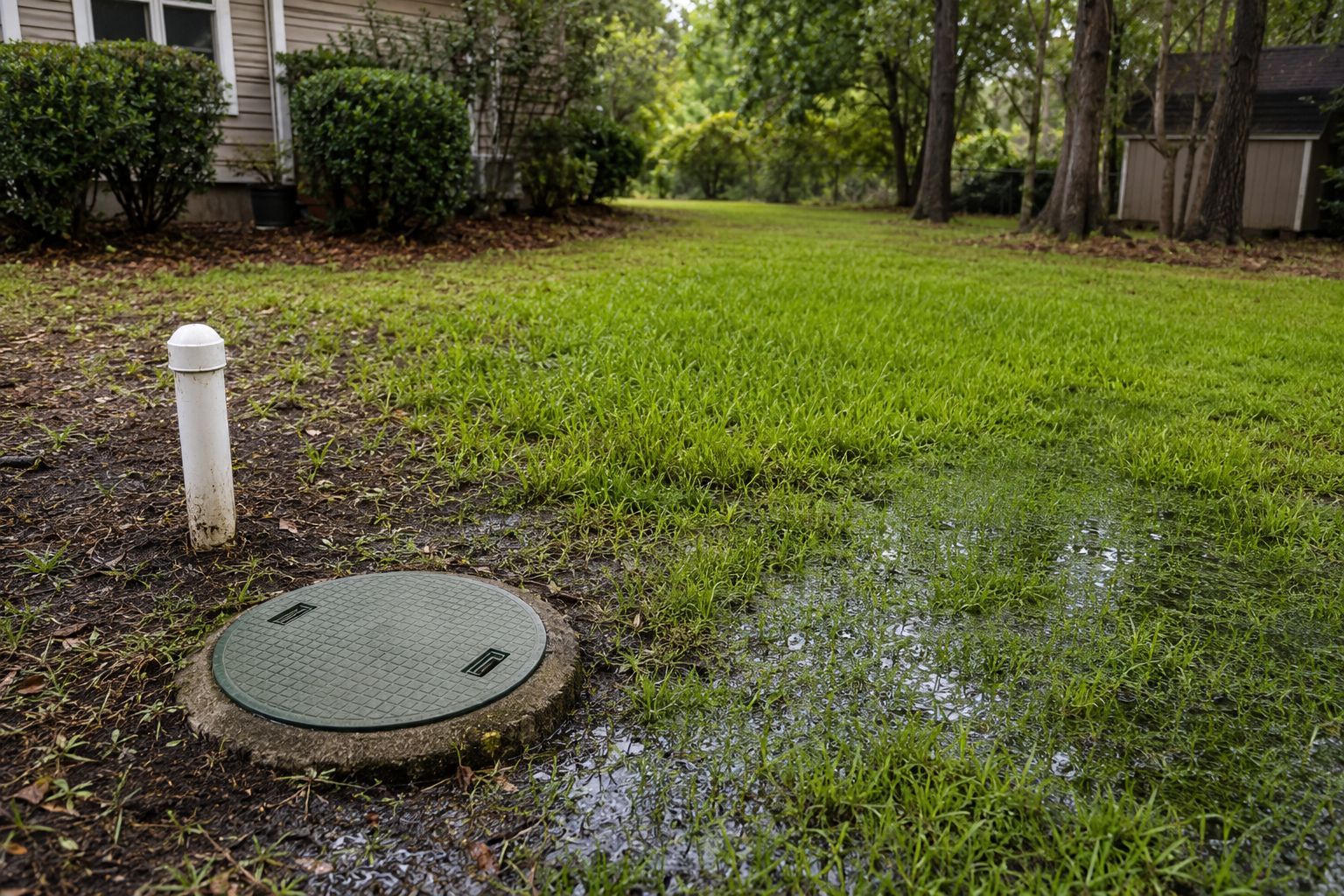
You walk past the side of the house and notice water bubbling from the top of that brass and plastic fixture standing about a foot above the flower bed. It sputters every time the sprinklers kick on, then keeps dripping after they shut off. Or maybe you caught a faint chemical taste at the kitchen sink and could not place it. Either way, you are looking at the right spot. That device near your spigot is the only thing keeping water that has run through soil, fertilizer, and pesticide from traveling backward into the water you cook and drink with.
When it spits, leaks, or sits there cracked, that protection is already compromised. After years on irrigation systems across north Georgia, we can tell you the homeowners who catch this early avoid the part that matters most, which is contaminated water reaching an indoor tap. The warning signs are easy to read once you know what the device is supposed to do.
What To Do The Moment You See It
Shut the system down first, then look closer.
- Find the irrigation shutoff valve, usually near the meter or where the line leaves the house, and turn off water to the system.
- Look at the device. Note whether water sprays from the top vent, drips from a fitting, or pools at the base.
- Run a cold tap inside and check for cloudy water, sediment, or an off smell.
- Leave the system off until the device is inspected. Hand watering is fine for now.
WARNING: If your indoor water looks cloudy, smells of chemicals or sulfur, or tastes wrong after you spot the device leaking, stop drinking and cooking with it right away. Backflow can carry lawn chemicals and soil bacteria straight into your supply, and that is a health risk you do not guess at.
TIP: Watch the device through one full cycle first. Water that sprays from the vent only at startup points to a tired seal. Steady dripping that never quits usually means debris is holding a check open. Knowing which one you see helps us arrive with the right parts.
How Backflow Travels Back Into Your Home
Backflow is simply water in your irrigation lines reversing direction and heading back toward the clean supply. Two things cause that reversal. Back siphonage happens when pressure in the city main drops suddenly, often from a main break or heavy demand on a hot afternoon, and the drop creates suction that pulls yard water backward. Back pressure happens when pressure on the irrigation side climbs higher than the supply and shoves water the wrong way.
Your backflow preventer stops both. On most Georgia homes it is a pressure vacuum breaker mounted at least 12 inches above the highest sprinkler head. Inside, a spring loaded poppet and check assembly snap shut the instant flow tries to reverse and vent the line to open air. When the spring weakens, the seal hardens, or grit props the poppet open, that one way protection fails and the vent starts spitting the water it is meant to hold back.
Why These Devices Fail So Often In Georgia
Most failures we see trace back to freeze damage the device was never protected from. Our winters feel mild, but a single hard freeze in the teens or low twenties freezes the water trapped inside a vacuum breaker, and water expands as it freezes. That expansion cracks the plastic bonnet or splits the poppet, so the device leaks the moment you restart the system in spring.
Mineral buildup is next. Many north Georgia homes run hard water, and over a few seasons calcium scale coats the poppet and seal until they no longer seat cleanly. Summer sun is a quieter culprit, since these bonnets sit fully exposed and UV slowly makes the plastic brittle and the rubber stiff. That is why a unit that tested fine three years ago can fail with no obvious cause. Installation height matters too. A device mounted lower than 12 inches above the heads, or set in a low spot where mulch and clay trap moisture, fouls and corrodes far faster than one with air around it.
How We Diagnose And Fix It
We start at the device, not the sprinkler heads, because the symptom almost always begins there. A visual check comes first, looking for cracks, mineral crust around the vent, and correct mounting height. Then we open the test cocks and read the pressure across each check with a calibrated gauge, which tells us whether the poppet and spring still hold the difference they should. On service calls we frequently find a unit that only needs a fresh rebuild kit, and the gauge reading is what separates that from full replacement.
A rebuild is the common fix. We replace the poppet, springs, seals, and O rings, then retest. A handy homeowner can swap these parts, though the pressure test that confirms the device is protecting your water again is the step that matters. Full replacement is the answer when the body is cracked from a freeze or corroded past saving, since there is no patching a split bonnet that will hold.
Honest answer on repair versus replace. A sound body under roughly eight years old is almost always worth rebuilding. Once the bonnet shows freeze cracks, replacement is the better call, because a rebuild on a failing housing just leaks again next season.
Keeping It From Happening Again
This device is low maintenance, but the few tasks it needs prevent nearly every failure above. Each month during watering season, glance at it during a cycle and confirm the vent runs dry. Each quarter, clear mulch, clay, and debris from the base so the unit drains and breathes. Once a year, in spring before the system comes back online, have it tested and rebuilt as needed, which catches winter freeze damage before the first full run.
The single most important task in our climate is winterization. Before the first hard freeze, drain or blow out the lines and insulate the device. Skipping this one step causes more spring failures than everything else combined, and it is the mistake we see most. The other common one is ignoring a spitting vent because a little water looks harmless, when steady venting is your signal to inspect. Mounting the device too low to hide it is well meant but leaves the line unprotected. Looks lose to function here.
Frequently Asked Questions
Can sprinkler backflow really make my drinking water unsafe?
Yes. Water that passed through soil, fertilizer, and pesticide can reverse into your home supply when the preventer fails. That is the whole reason the device exists. If indoor water looks or smells off after a leak, stop using it.
Why does my backflow device spray water every time the sprinklers start?
A short spray at the top vent during startup usually means an internal seal or spring is worn and no longer seats cleanly. It often gets worse over a season. A rebuild kit restores it, and a quick pressure test confirms the fix.
Do I really need to winterize my irrigation backflow preventer in Georgia?
Yes, and skipping it is the top cause of spring failures we see. Georgia gets hard freezes most winters, and trapped water expands as it freezes and cracks the housing. Draining or blowing out the lines and insulating the device prevents it.
Is it safe to fix a leaking backflow preventer myself?
A handy homeowner can swap a rebuild kit, but the pressure test that confirms the device is protecting your water takes a calibrated gauge most people do not own. If the housing is cracked, replace it. When in doubt, have us verify it.
How often should a lawn irrigation backflow preventer be tested?
Once a year is the right rhythm, ideally in spring before you bring the system back online. That timing catches winter freeze damage before the first full run. These devices fail silently, so a yearly test is the only reliable way to confirm protection.
Your Local Choice For Safe Irrigation Water Protection
That device by your spigot is a one way gate, and the moment it spits, drips, or cracks, the gate is open and your drinking water is exposed. Reading that early is the whole game. The risk runs higher here than the mild reputation of our winters suggests, because the same yards that bake under summer UV also take quick hard freezes that can split a vacuum breaker overnight, while hard water wears it down from the inside. With 10 years of experience, we understand how local conditions affect irrigation backflow devices and provide dependable solutions that help protect your home's water supply.
If your irrigation backflow preventer is spitting, leaking, or overdue for a test, we can inspect, rebuild, or replace it and confirm your water is protected. SHARP Improvements serves homeowners across Monroe, Georgia. Reach out and we will get your system checked before the next freeze does the deciding for you.
You might also like